 Founders Dumpster Rental
Commercial & Contractor Accounts Philadelphia
A commercial or contractor account is a standing arrangement for crews running more than a one-off job, not a single-drop consumer rental. General contractors gutting rowhomes in Fishtown, roofers tearing off in…
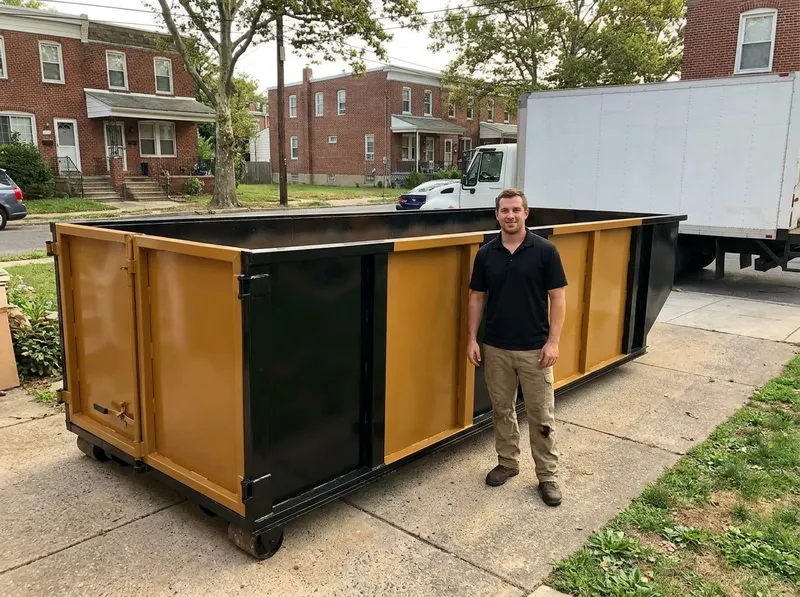
- What's included: flat-rate 10-40 yard roll-offs, delivery, haul-away, and disposal on one price per pull.
- How fast: dropped on schedule for active job sites, with standing swaps arranged so an empty bin replaces a full one.
- What it costs: $595 (10-yd) to $895 (40-yd), all-in, no hidden tonnage or fuel add-ons; $595 minimum charge.
- What we take: construction debris, roofing tear-off, demolition, remodel waste, and general commercial cleanout material.
- How to book: call (267) 482-5065 to set up a standing account and lock delivery windows for your Philadelphia sites.
A commercial or contractor account is a standing arrangement for crews running more than a one-off job, not a single-drop consumer rental. General contractors gutting rowhomes in Fishtown, roofers tearing off in Northern Liberties, and property managers turning units in South Philadelphia all use accounts to keep a bin on site through every phase of the build. The account covers repeat swaps: when a 20-yard fills mid-project, a fresh bin replaces it so framing, drywall, and demo debris never stall the schedule.
Sizing follows the job, not the guess. A 10-yard ($595) holds roughly four pickup loads and suits a single-bath or kitchen remodel. A 20-yard ($695) handles a full-floor gut in a Kensington or Point Breeze rowhouse. A 30-yard ($795) fits a whole-home renovation or a mid-size demolition, and a 40-yard ($895) carries bulky, light material like a full roof tear-off or a Manayunk estate clear-out. The trade-off is footprint against volume: the 40-yard swallows the most debris but needs the most curb or driveway room, which matters on the tight one-way streets of Bella Vista and Germantown.
Philadelphia street placement is the detail that trips up out-of-town haulers. Bins set on a public street in most rowhouse blocks require a permit from the city, while a bin on a private driveway or lot at a Roxborough or Mount Airy site usually does not. Accounts get placement worked out ahead of the drop so a delivery isn't turned back for lack of room or paperwork. Every pull on the account bills at the same flat number quoted, so a project manager can price debris removal into a bid without a surprise tonnage charge changing the total after the fact.
Setting up an account is a short sequence. First, call and name your typical sites, sizes, and how often you fill a bin. Second, the standing rate and delivery windows are confirmed against those sizes. Third, each swap is scheduled by a call when a bin fills, and the empty replaces the full one on the same visit where routing allows. One point worth clarifying: a dumpster account is not junk removal, so the crew loads the bin, and the hauler drops, swaps, and disposes.
Commercial & Contractor Accounts cost in Philadelphia
Every job gets a firm, written price after a free on-site visit.
Common questions
How much does a commercial dumpster account cost in Philadelphia?
Do contractor accounts in Philadelphia get faster bin swaps?
Who handles the street permit for a job-site dumpster in Philadelphia?
What size dumpster should a contractor account use in Philadelphia?
Is a commercial dumpster account the same as junk removal in Philadelphia?
Get started today
Tell us about your commercial & contractor accounts job in Philadelphia and we'll send a clear, written quote, usually the same day.
913 Wallace Street, Philadelphia PA 19123
Monday: Open 24 hours
Tuesday: Open 24 hours
Wednesday: Open 24 hours
Thursday: Open 24 hours
Friday: Open 24 hours
Saturday: Open 24 hours
Sunday: Open 24 hours